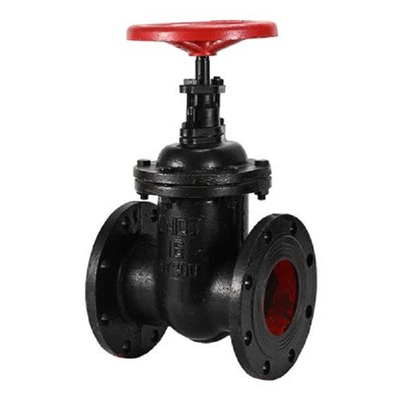

What is the structure of a Dark Rod Flat Gate Valve?
Leave a message

A Dark Rod Flat Gate Valve is a crucial component in many industrial systems, known for its reliability and efficiency in controlling the flow of various fluids. As a supplier of Dark Rod Flat Gate Valves, I have in - depth knowledge of its structure, which I will share in this blog.
Overall Structure
The Dark Rod Flat Gate Valve consists of several main parts, each with its own specific function. The valve body is the outer casing that houses all the internal components. It is typically made of high - quality materials such as carbon steel, stainless steel, or alloy steel, depending on the application requirements. The choice of material ensures the valve can withstand high pressures, corrosive environments, and different temperatures.
Bonnet
The bonnet is connected to the valve body and serves as a cover to protect the internal parts. It is usually attached to the valve body through bolts or studs, creating a tight seal. The bonnet also provides a mounting point for the stem and other components. In some designs, the bonnet may have a gland packing area, which is used to prevent leakage around the stem. The gland packing is made of materials like graphite or PTFE, which can effectively seal the gap between the stem and the bonnet while allowing the stem to move freely.
Gate
The gate is the most important part of the flat gate valve. It is a flat, rectangular plate that moves up and down to control the flow of fluid through the valve. When the gate is fully open, it allows the fluid to pass through the valve with minimal resistance. Conversely, when the gate is fully closed, it blocks the flow completely. The gate is designed to fit precisely between the valve seats, ensuring a tight seal. The surface of the gate is often hardened or coated to resist wear and corrosion, especially in applications where the fluid contains abrasive particles.
Seat
The seats are located on either side of the gate and are in contact with the gate when it is closed. They are responsible for creating a seal to prevent leakage. The seats can be either soft - seated or metal - seated. Soft - seated valves use materials like rubber or elastomers to create a tight seal, which is suitable for applications where a low - leakage rate is required. Metal - seated valves, on the other hand, are more suitable for high - temperature and high - pressure applications, as they can withstand extreme conditions without deforming. The seats are usually replaceable, which makes maintenance and repair of the valve more convenient.
Stem
The stem is connected to the gate and is used to move the gate up and down. There are two types of stems: rising stems and non - rising stems. In a rising stem valve, the stem moves up and down along with the gate, which allows the operator to visually determine the position of the gate. Non - rising stem valves, however, have a stem that rotates but does not move axially. The rotation of the stem is transferred to the gate through a threaded mechanism, causing the gate to move up or down. Non - rising stem valves are often used in applications where space is limited.
Actuator
The actuator is the device that provides the force to operate the valve. It can be manual, electric, pneumatic, or hydraulic. Manual actuators, such as handwheels or levers, are the simplest and most cost - effective option. They are suitable for small - sized valves or applications where the valve does not need to be operated frequently. Electric actuators use an electric motor to drive the stem, which allows for remote operation and automation. Pneumatic actuators use compressed air to generate the force, and they are often used in applications where a fast - acting valve is required. Hydraulic actuators use hydraulic fluid to provide the force, and they are capable of generating high forces, making them suitable for large - sized and high - pressure valves.


Special Types of Dark Rod Flat Gate Valves
In addition to the standard Dark Rod Flat Gate Valve, there are also some special types that are designed for specific applications. For example, the Normal Temperature Flat Gate Valve is suitable for applications where the temperature of the fluid is within a normal range. It is often used in general industrial pipelines, water supply systems, and sewage treatment plants.
The Fire Slab Gate Valve is designed to meet the requirements of fire - protection systems. It is made of fire - resistant materials and has a special design to ensure that it can maintain its integrity and functionality in case of a fire. This type of valve is commonly used in fire - sprinkler systems and fire - hydrant networks.
The Adjustable Flat Gate Valve allows for precise control of the flow rate. It has a mechanism that can adjust the position of the gate more accurately, which is useful in applications where the flow rate needs to be regulated continuously, such as in chemical processing plants or oil refineries.
Maintenance and Inspection
To ensure the proper functioning of the Dark Rod Flat Gate Valve, regular maintenance and inspection are necessary. The valve should be inspected for signs of wear, corrosion, and leakage. The gland packing should be checked and replaced if necessary to prevent leakage around the stem. The gate and seats should be inspected for damage, and any worn or damaged parts should be replaced promptly. The actuator should also be maintained regularly to ensure its reliability.
Conclusion
Understanding the structure of a Dark Rod Flat Gate Valve is essential for both users and suppliers. As a supplier, I can provide high - quality Dark Rod Flat Gate Valves that are designed to meet the specific needs of different applications. Whether you need a standard valve or a special type, we have the expertise and resources to offer the right solution.
If you are interested in purchasing Dark Rod Flat Gate Valves or have any questions about our products, please feel free to contact us for further discussion and negotiation. We are committed to providing you with the best products and services.
References
- Valve Handbook, by Leslie E. Kinsman
- Industrial Valves: Selection and Sizing, by James E. Swearingen