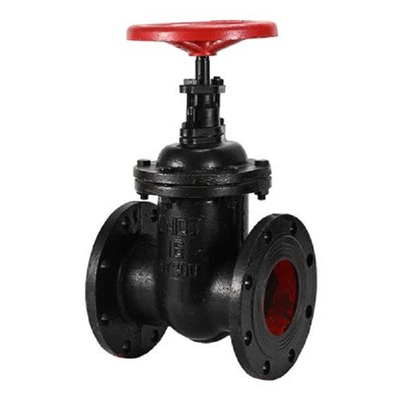

How to adjust the opening degree of a building slab gate valve?
Leave a message

Hey there, folks! As a supplier of Building Slab Gate Valves, I often get asked about how to adjust the opening degree of these valves. It's a crucial aspect, especially when it comes to ensuring the proper functioning of your building's plumbing or other fluid - control systems. So, let's dive right into it.
Understanding the Basics of Building Slab Gate Valves
First off, let me give you a quick rundown of what a Building Slab Gate Valve is. These valves are designed to control the flow of fluids in pipes. They work by using a flat gate that moves up and down to either block or allow the fluid to pass through. They're commonly used in buildings for water supply systems, heating, and even in some industrial applications within the building premises.
There are different types of Building Slab Gate Valves available. For instance, you've got the Gray Cast Iron Flat Gate Valve. It's a popular choice because gray cast iron is durable and can withstand a fair amount of pressure. Then there's the Stainless Steel Flat Gate Valve. Stainless steel offers excellent corrosion resistance, making it ideal for environments where the fluid might be corrosive or in areas with high humidity. And if you prefer a more hands - on approach, the Manual Slab Gate Valve is a great option. You can control it directly without the need for any external power source.
Tools You'll Need
Before you start adjusting the opening degree of a Building Slab Gate Valve, you'll need a few tools. A basic set of wrenches is a must - have. Depending on the size and type of the valve, you might need an adjustable wrench or a specific socket wrench. A flashlight can also be useful, especially if the valve is located in a dark or hard - to - reach area. And it's always a good idea to have a pair of safety gloves to protect your hands from any sharp edges or hot surfaces.
Pre - adjustment Checks
Before you even touch the valve, it's important to do some pre - adjustment checks. First, make sure that the system the valve is part of is shut down. This means turning off the water supply or whatever fluid is flowing through the pipe. You don't want to be making adjustments while the fluid is still under pressure as it can be dangerous and might cause leaks.
Next, visually inspect the valve. Look for any signs of damage, such as cracks in the body of the valve, or if the gate is stuck. Check the valve stem to see if it's straight and if the threads are in good condition. A damaged valve might need to be replaced rather than adjusted.
Adjusting the Opening Degree
Now, let's get to the actual adjustment process. If you're dealing with a manual slab gate valve, the adjustment is relatively straightforward. Find the valve handle. Most manual valves have a wheel - shaped handle. To open the valve, turn the handle counter - clockwise. The farther you turn it, the wider the gate opens, and the more fluid can flow through the pipe. To close the valve, simply turn the handle clockwise.
If you're trying to set a specific opening degree, you can use a reference point. For example, if the handle has markings on it, you can use those to measure how far you've turned it. If there are no markings, you can make a small mark on the handle and the valve body yourself to keep track of the opening degree.
For an automated Building Slab Gate Valve, the process is a bit different. These valves are usually controlled by a motor or an actuator. To adjust the opening degree, you'll need to access the control panel. This might be located near the valve or in a central control room.
On the control panel, there will typically be a set of buttons or a digital interface. You can use these to input the desired opening degree. For example, you might enter a percentage like 30% to open the valve a third of the way. The control system will then send a signal to the actuator, which will move the gate to the appropriate position.
Troubleshooting During Adjustment
Sometimes, things don't go as smoothly as planned when adjusting the opening degree. If you're having trouble turning the handle of a manual valve, it could be due to a few reasons. One possibility is that the valve is jammed. This could be because of debris trapped in the valve or because the gate has seized up. In this case, you might need to clean the valve. Try using a pipe cleaner or a small brush to remove any debris from the valve's internals.
If the problem persists, the valve might need to be lubricated. You can use a silicone - based lubricant on the valve stem and other moving parts. Just be careful not to over - lubricate, as this can also cause problems.
For automated valves, if the valve isn't moving to the correct position, it could be a problem with the control system. Check the power supply to the actuator and the control panel. Make sure all the connections are secure. If the issue still isn't resolved, it might be a malfunction in the actuator itself, and you may need to call in a professional.
Post - adjustment Checks
Once you've adjusted the opening degree of the Building Slab Gate Valve, it's important to do some post - adjustment checks. First, turn the system back on slowly. Monitor the flow of the fluid and check for any leaks around the valve. Use your flashlight to look closely at the valve body and the connections to the pipes.
If there are any signs of leakage, you'll need to shut the system down again and check the valve packing. The packing is what seals the valve stem and prevents fluid from leaking out. If it's worn or damaged, you might need to replace it.


Also, make sure that the fluid is flowing at the desired rate. If the flow is too high or too low, you may need to make further adjustments to the opening degree of the valve.
Why Choose Our Building Slab Gate Valves
Now, as a supplier, I'm super proud of the Building Slab Gate Valves we offer. Our valves are made from high - quality materials, which means they're durable and reliable. Whether you need a Gray Cast Iron Flat Gate Valve for its strength or a Stainless Steel Flat Gate Valve for its corrosion resistance, we've got you covered.
Our Manual Slab Gate Valves are easy to operate and simple to maintain. And if you're looking for automated solutions, we have state - of - the - art valves with advanced control systems.
Contact Us for Your Valve Needs
If you're in the market for Building Slab Gate Valves or you've got questions about adjusting their opening degrees, don't hesitate to reach out. We're here to help you make the best choice for your building's fluid - control systems. Whether it's a small - scale project or a large - scale industrial building, we can provide the right valves and support you need.
References
- "Valve Handbook: Principles and Applications" by Libanore, Claudio
- "Engineering Fluid Mechanics" by Finnemore, E. John and Franzini, Joseph B.