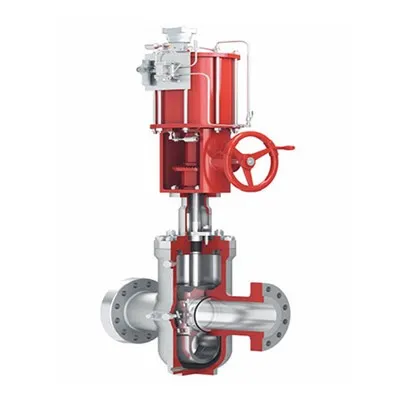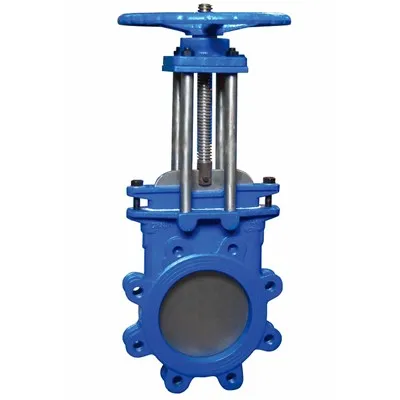
Your Professional Flat Gate Valve Without Diversion Hole Suppliers in China

Zhejiang Advanced Technology Valve Co., Ltd. is a technology-based manufacturing enterprise, which integrates designing, manufacturing and marketing valves and owns one stop service. The company's leading products include flat gate valves with diversion holes, flat gate valves without diversion, expansion double gate flat gate valves, hard-sealed double gate flat gate valves, and special flat gate valves for alumina plants.

18 Month Warranty

We offers an 18-month warranty for each valve. Within these 18 months, if our products fail, leak, or even damage during use (excluding human factors), we will be responsible for replacing the products with quality problems and delivering them to your warehouse.

Advanced Equipment

The company has various precision machining and testing equipment, large-scale surface CNC grinders, sphere machining centers and other new technologies, as well as the first-class full-performance testing equipment in the country.

Wide Range of Applications

The valve products produced by the company are widely used in petroleum, natural gas, chemical industry, polysilicon, coal chemical industry, power station, metallurgy, papermaking, medicine, military industry and other industries.


Excellent Pre-sales Service

Our pre-sales service includes the communication and confirmation of a series of transaction terms before you place an order, including price, product drawings, trade terms, delivery date, etc. In addition, in the process of order production, we will let you know the status of the product in the form of pictures and videos to confirm the production process.


Introduction of Flat Gate Valve Without Diversion Hole


Flat Gate Valve is a sliding valve whose closing part is a parallel gate. The closing member may be a single shutter or a double shutter with a spreading mechanism therebetween.
The pressing force of the gate to the valve seat is controlled by the medium pressure acting on the floating gate or floating valve seat. If it is a double gate plate gate valve, the expansion mechanism seen by the two gates can supplement this pressing force.


Product Specification


Normal diameter

1/2"~60" (DN15~DN1500).

End connection

BW, Flanged

Pressure range

150lbs~2500lbs (PN16~PN420)

Body material

Carbon steel, stainless steel, alloy steel, dual-phase steel

Connection: RF, BW, RTJ

Operation

Handwheel, Gearbox, Electric, Pneumatic, Electro hydraulic actuator, Gas over oil actuator

Usage

Flow control

Application

Industrial Usage

Face to Face

ASME B16.10.

Pressure-Temp

ANSI B16.34

Connection

ANSI B16.5,ANSI B16.25

Seat Material

PTFE, RPTFE, PEEK, Stainless Steel, Stellite, other material optional

Gate Material

Carbon Steel, Stainless Steel, Duplex, Hastelloy, Inconel, Monel, Alloy20, Incoloy, other materials optional

Working Temperature

-196℃~600℃

Packing

To be packed in suitable wooden cases as per client's option or customized

Shipping & Delivery

20-25 days lead time; deliver by ship from Ningbo port or Shanghai port

Notes

Serial valve connecting flange and butt-welding terminal size can be designed at customers’ request.

The material of the main parts and sealing surface of the valve can be designed and selected according to the actual working conditions or the special requirements of users.


productcate-634-503


Advantages of Flat Gate Valves Without Diversion Hole

● Bonnet pressure self-sealed design.
● Fireproof design.
● Extended stem optional.
● Single or double flat gate optional.
● Reliable internal and external sealing.
● Pressure self-relief design of valve pocket.
● Elastic gate design.


Key Features of Flat Gate Valve Without Diversion Hole

The valve seat is sealed with an O-ring seal and a floating valve seat structure that applies a preload so that the inlet and outlet of the flat gate valve are sealed in both directions; and the opening and closing torque of the structure is only 1/2 of the ordinary valve, which can easily open, Close valve.


A packing structure with self-sealing capability is used, which does not require frequent adjustment. It is extremely easy to open and close and has the reliable sealing performance. A supplementary sealing grease injection structure is provided at the packing box. The sealing performance is absolutely reliable and truly reaches zero leakage; The most prone to leakage at the valve packing.

When fully open, the channel is smooth and straight, the flow resistance coefficient is extremely small, and there is no pressure loss. The pipeline can be cleaned through the hairball.

When the flat gate valve is closed, it can automatically remove the high pressure in the inner cavity to ensure safe use.

Fully enclosed structure, good protection performance, can adapt to all-weather requirements.


Parts of Flat Gate Valve Without Diversion Hole
API 6A Flat Gate Valve
ISO Slab Gate Valve
German Standard Flat Gate Valve
Forged Steel Flat Gate Valve

A gate valve’s vital components are the body, gate, seat, stem, bonnet, and actuator. Gate valves may have flanged ends drilled in accordance with pipeline-compatible flange dimensions requirements. Cast iron, cast carbon steel, ductile iron, gunmetal, stainless steel, alloy steels, and forged steels are common materials for gate valves. In the following, each part of the gate valve that is mentioned above is fully described.

Gate
The gate is available in a variety of designs and technologies to ensure that it provides good sealing for a number of applications; however, it can be generally classified as parallel or wedge-shaped. Parallel gates include parallel slide gates, slab gates, and parallel expanding gates. Knife gates are also another type of gate valve whose structure is very similar to wedge valves. In the following, these types are introduced.

Wedge Gates
Wedge type gate valves have a wedge-shaped disc that is seated against two inclined seats. Solid wedges are utilized in applications where there is a high flow or turbulence, such as steam service. Moreover, vibration and chatter are significantly reduced due to the solid structure. In addition to the primary force provided by fluid pressure, the tightening of the stem creates a significant wedging force on the seats, which aids in sealing. Due to reduced rubbing on the seats, the wedge-shaped gate does not stick to the seat in the event of high fluid differential pressure. Hence, it also has a longer lifespan. Split wedge discs are more flexible and can be employed in situations where pipeline strains may cause valve seats to distort.

Parallel Slide Gates
Gate valves can also be found in a parallel configuration, with the gate flat and the seat parallel. Parallel gate valves provide a tight seal by utilizing line pressure. Flat gates are made up of two parts with a spring in the middle. For better sealing, the spring pushes the parts closer to the seats. Parallel gate valves have a safety advantage in higher temperature situations due to their inherent design. In wedge-shaped gate valves, an additional compression force on the seats can cause thermal binding and restricted valve opening due to expansion. Furthermore, because parallel gates have no wedging action, closing torques are reduced, resulting in smaller, less expensive actuators or less manual effort. Parallel gates keep dirt off the seating surfaces since they slide into place.

Slab Gates
Slab gates, known as through-conduit gate valves, are single-piece gates that contain a bore-size hole in the middle. In the open position, the bore is aligned with the two-seat rings. This alignment creates a smooth, turbulence-free flow. This unique design provides for minimal pressure loss on the system and is ideal for transporting crude oil and natural gas liquids. The valve seats are still clean. The disc cavity, on the other hand, can catch foreign particles. As a result, the cavity usually contains a built-in plug for removing the accumulated foreign material during maintenance.


Our Certificates

We guarantee that all our products have passed the quality control and stringent regulations imposed not only by our company but also by international organizations. Our certifications assure that our product line is top grade by industry standards.

productcate-1-1
productcate-1-1
productcate-1-1
productcate-1-1


Common Problem of Flat Gate Valve Without Diversion Hole


Q: What industries use gate valves?

A: Gate valves are found in a variety of industries, such as underground water or sewage disposal applications. They are also commonly found in irrigation and distribution service lines. Gate valves are suited for high pressures and temperatures, and are also used for low-pressure steam, and non-corrosive gas or oil.

Q: What are the problems with gate valve?

A: The most common causes of gate valve failure are wear and the seat's and wedge's corrosion. The inner areas of a valve wear off over time, and corrosion can make the wedge stick in the open or closed position. When the handwheel is overused, the stem leading to the wedge breaks off and renders the valve useless.

Q: Should you throttle a gate valve?

A: Gate valves are not intended for throttling. They are designed such that media flowing at high velocity can vibrate and quickly erode or tear a partially-open valve disc off its seat. In a pinch, gate valves should only be used for throttling when the gate is 90% closed.

Q: Should gate valve be open or closed?

A: If water or another fluid flows through the valve in the direction of flow, this implies that the gate valve is in its open position. Conversely, if there is no discernable flow, then the faucet or gate valve is in a closed position.

Q: Should I use a gate valve or stop valve?

A: Gate valves are used to control the flow of liquids and gasses. They are often used in piping systems to regulate the flow of water or other fluids. On the other hand, stop valves are used to shut off the flow of liquids or gasses. They are often used in emergencies to shut off the flow of a substance quickly.

Q: How do you stop a gate valve from leaking?

A: Hence, the first step you should do to stop the leak is to tighten the packing nut. Replace the valve stem packing material or washer. When the gate valve's packing nut is tightened, it confines the packing material against the washer to prevent any water from passing through.

Q: What is the difference between a gate valve and a wedge gate valve?

A: Wedge valves have a conical or wedged-shaped disk, while gate valves have a flat disk. Wedge valves rely on a wedging action to seal, while gate valves rely on a linear motion. Wedge valves are well-suited for high-pressure applications, while gate valves are not. Wedge valves are more expensive than gate valves.

Q: What pressure should a gate valve be?

A: The main purpose of gate valve is to shut off the flow of fluids in a system. The valve is designed to be in either a fully opened or fully closed position. It is suitable to apply in low pressure application and the pressure rating can be up to 150 PSI working pressure.

Q: What is the technical name for gate valve?

A: Sluice valve or Gate Valve: These valves are used to regulate the flow of water in the pipe system. It is provided to control the flow of water in the distribution system at street corners and where the pipelines intersect.

Q: Do gate valves need maintenance?

A: Gate Valve's require periodic maintenance to inject a lubricant into the valve cavity. The purpose of the lubricant is to occupy the empty space in the valve cavity, displacing aggressive fluids and contaminants and acting as a barrier to prevent further ingress.

Q: Are all gate valves full port?

A: By design, gate valves have full-port ports. This means that the valve port size equals the inner diameter of the connecting pipe. Full-bore gate valves allow fluid to flow freely without obstruction and without creating a pressure drop within the pipeline.

Q: What is the top of a gate valve called?

A: The gate valve differs from ball, plug and butterfly valves in that the closure element, called the disc, gate, or obturator, rises on the base of a stem or spindle out of the waterway and into the valve top, called the bonnet, by means of multiple turns of the spindle or stem.

Q: What is the difference between a gate valve and a knife gate valve?

A: One of the differences between the gate and the knife gate valves, is that the knife gate valve often has a sharpened disc to better cut through slurry/viscous media. Also, the knife gate valve has a short face-to-face length compared to a gate valve, which is dimensionally wider.

Q: What is a 3 way gate valve?

A: A 3-way control valve stops water flow in one pipe while allowing it to flow in another. The valve can also combine water from two distinct pipes into one pipe or redirect water from one pipe into two different pipes in a modulating or three-point floating application.

Q: Why do gate valves always leak?

A: Corrosion: This is one of the major causes of valve leakage. Over time, the valve parts in contact with the process fluid lose material as it corrodes. The rate at which this happens should be predicted at the design stage, and the necessary material corrosion allowance should be included in the valve selection.

Q: How do you tell if a gate valve is open or closed?

A: When the stem is flush with the handle, the valve is closed. For Non-Rising Stem (NRS) Gate Valves, the handle will rise above the valve when open. The valve is closed when the handle is flush to the top of the valve.

Q: Why use a gate valve instead of a butterfly valve?

A: Flow regulation: A butterfly valve can modulate or throttle flow, whereas a gate valve can only be on/off. Flow resistance: A gate valve offers less flow resistance and, therefore, less pressure drop than a butterfly valve. Pressure: Gate valves can handle higher pressures than butterfly valves.

Q: Why should you close a gate valve slowly?

A: The faster the valve is closed, the more aggressively kinetic energy is converted into pressure, resulting in a higher pressure surge. The more gradually a system can slow its flow, the better a pressure surge is mitigated. Imagine gradually applying the brakes in a car compared to slamming on the brakes.

Q: How long should a gate valve last?

A: The average valves would last about 25-years, but if the central heating system is well looked after and the hot or cold water has low water deposits in the sense of scale, then the chances are, the valve may last for a longer time.

Q: Why use a gate valve instead of a ball valve?

A: When it comes to controlling the flow of fluid in a pipeline, one of the most important considerations is the type of valve you choose. Two common valve types used in different applications are ball valves and gate valves. While both have their advantages, there are several reasons why gate valves are preferred over ball valves in certain situations. Gate valves have a flat or wedge-shaped gate that moves up and down within the valve body to regulate the flow of fluid. Ball valves, on the other hand, have a spherical ball that rotates within the valve body. Here are some reasons why a gate valve may be a better choice than a ball valve:
Better flow control: Gate valves have a larger flow area compared to ball valves, which makes them ideal for applications that require high flow rates or where precise flow control is necessary. Due to their flat gate, gate valves have a more linear flow characteristic, allowing for better flow control. In contrast, ball valves can have dead spots or areas of turbulence, which can affect flow control and make them unsuitable for certain applications.
Higher pressure rating: Gate valves are designed to handle higher pressures than ball valves. The wedge-shaped gate of a gate valve allows it to withstand greater pressure loads without deforming or cracking. In contrast, the spherical shape of a ball valve means that it can only handle lower pressure ratings before it starts to deform.
Better sealing: The design of a gate valve allows for a tight seal on both sides of the valve, making it ideal for applications that require a zero-leakage seal. This is particularly important in applications where hazardous or toxic fluids are being transported. Ball valves, on the other hand, have only one seal on the upstream side, making them more prone to leaks and unsuitable for hazardous fluids.
Longer lifespan: Gate valves tend to have a longer lifespan than ball valves due to their simpler design and construction. The flat gate of a gate valve is less prone to wear and tear compared to the spherical ball of a ball valve. This means that gate valves require less maintenance and are more durable, making them ideal for installation in remote or hard-to-reach locations.
Lower cost: Gate valves are generally more cost-effective compared to ball valves. This is because gate valves are simpler in design and require fewer components, making them easier to manufacture. Additionally, gate valves have a longer lifespan, which means they need to be replaced less frequently, saving on maintenance and replacement costs.

As one of the leading flat gate valve without diversion hole enterprises in China, we warmly welcome you to buy bulk cheap flat gate valve without diversion hole in stock here from our factory. All customized our products are with high quality and competitive price.

Expansion Flat Gate Valve Without Diversion Hole, Knife shaped Slab Gate Valve Without Diversion Hole, Quick Opening Flat Gate Valve Without Diversion Hole

Shopping Bags