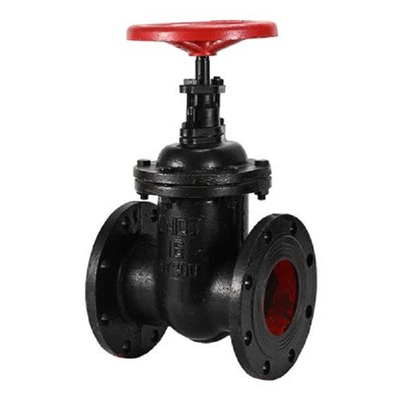

What are the disadvantages of a Ferrule Flat Gate Valve?
Leave a message

As a supplier of Ferrule Flat Gate Valves, I've spent a significant amount of time learning about and promoting these products. While they offer numerous advantages in various industrial applications, it's essential to have a balanced view. In this blog post, I'll delve into the disadvantages of Ferrule Flat Gate Valves.
1. High Initial Cost
One of the most notable drawbacks of Ferrule Flat Gate Valves is their relatively high initial cost. These valves are engineered with precision and often include high - quality materials to ensure reliable performance. The manufacturing process involves intricate machining and assembly steps, which drive up the production cost. For example, the ferrules need to be precisely crafted to ensure a proper seal, and the gate itself requires accurate forming and finishing.
Compared to some other types of valves, such as basic ball valves or butterfly valves, the price tag of Ferrule Flat Gate Valves can be substantially higher. This can be a deterrent for small - scale projects or budget - conscious customers. When considering a project with a tight budget, the cost of these valves may force the decision - makers to look for alternative valve solutions. Even in larger projects, the high initial investment in Ferrule Flat Gate Valves can strain the overall budget.
2. Complex Installation Process
The installation of Ferrule Flat Gate Valves is more complex compared to many other valve types. They require precise alignment to ensure that the gate can open and close smoothly without any binding. The ferrules also need to be correctly installed to create a reliable seal. Any misalignment during installation can lead to leakage or improper valve operation.
For instance, if the valve is not installed in a straight line within the pipeline, the gate may not fully close, resulting in a continuous flow of fluid even when the valve is supposed to be shut off. Moreover, the installation process often requires specialized tools and trained personnel. This means that the installation cost can be relatively high, as companies need to either hire professional installers or train their own staff.
In contrast, simpler valves like ball valves can be installed more easily, often by less - experienced workers using basic tools. The complexity of installing Ferrule Flat Gate Valves can delay projects and increase the overall cost of implementation.
3. Limited Sealing Performance in High - Temperature and High - Pressure Environments
Although Ferrule Flat Gate Valves are designed to provide a good seal in a wide range of operating conditions, they may face challenges in high - temperature and high - pressure environments. The materials used in the valve components, such as the gate, seat, and ferrules, may expand or contract due to extreme temperatures and pressures.
In high - temperature applications, the soft seating materials used in some Ferrule Flat Gate Valves can degrade, losing their ability to form a tight seal. Similarly, under high pressure, the forces acting on the valve can cause deformation of the gate or the seating surfaces, leading to leakage. For industries that operate at extreme temperatures and pressures, such as oil and gas refineries or power plants, this limitation can be a significant concern.
Alternative valve types, such as Flanged Slab Gate Valve, are often more suitable for these harsh environments. They are designed to withstand high - temperature and high - pressure conditions better, with more robust materials and construction methods.
4. Slow Opening and Closing Speed
Another disadvantage of Ferrule Flat Gate Valves is their relatively slow opening and closing speed. The design of these valves involves the movement of a flat gate that slides across the flow path. This sliding motion requires a certain amount of time to complete, especially in larger - sized valves.
In applications where quick shut - off is required, such as emergency shutdown systems in chemical plants or in pipeline systems where sudden pressure changes need to be controlled promptly, the slow opening and closing speed of Ferrule Flat Gate Valves can be a significant drawback. In such situations, faster - acting valves like ball valves or diaphragm valves are more commonly used.
The slow operation of these valves can also limit their efficiency in processes that require frequent valve adjustments. Operators may have to wait for the valve to open or close fully, which can disrupt the flow of operations and reduce overall productivity.
5. Maintenance Challenges
Maintaining Ferrule Flat Gate Valves can be a challenging task. The internal components of these valves, such as the gate, seats, and ferrules, are subject to wear and tear over time. The sliding action of the gate during opening and closing can cause abrasion on the seating surfaces, leading to reduced sealing performance.


Inspecting and replacing these worn - out components require disassembling the valve, which can be a time - consuming and labor - intensive process. Additionally, finding the right replacement parts can be difficult, especially for older valve models or those with specialized designs. Some parts may need to be custom - manufactured, which further increases the maintenance cost and downtime.
In comparison, other valve types may have simpler maintenance requirements. For example, some ball valves can be maintained with minimal disassembly, and replacement parts are readily available in the market.
6. Susceptibility to Cavitation and Erosion
In fluid flow systems, Ferrule Flat Gate Valves are susceptible to cavitation and erosion. Cavitation occurs when the pressure of the fluid drops below its vapor pressure, causing the formation of vapor bubbles. When these bubbles collapse, they can generate high - intensity shockwaves that can damage the valve components, especially the gate and the seating surfaces.
Erosion, on the other hand, is the wearing away of the valve materials due to the high - velocity flow of the fluid. The flat gate design of these valves can create areas of high - velocity flow, which increases the risk of erosion. Over time, cavitation and erosion can lead to leakage, reduced valve efficiency, and even complete valve failure.
In applications where the fluid has a high velocity or contains abrasive particles, such as in mining or pulp and paper industries, the risk of cavitation and erosion in Ferrule Flat Gate Valves is particularly high. Special measures, such as using more erosion - resistant materials, need to be taken to mitigate these issues, which can further increase the cost.
Encouraging Contact for Purchase Discussion
Despite these disadvantages, Ferrule Flat Gate Valves still have their unique advantages and are well - suited for many applications. At our company, we understand the challenges associated with these valves and are committed to providing high - quality products and excellent after - sales service. If you have any questions about Ferrule Flat Gate Valves, or if you're considering purchasing them for your project, we encourage you to contact us for a detailed discussion. We can help you evaluate whether these valves are the right choice for your specific needs and provide solutions to address any potential issues.
References
- Valve Handbook, 4th Edition, by Robert W. Saunders
- Industrial Valves: Selection and Sizing, by James E. Swearingen
- Valve Technology and Applications, by Peter J. Nolan