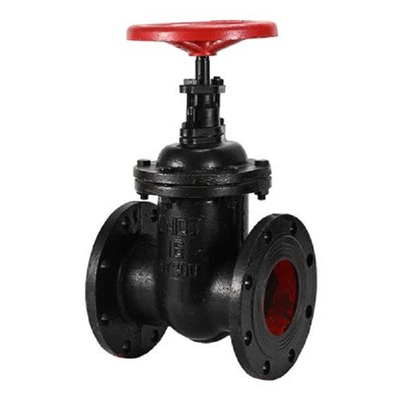

What is the operating speed of a Fire Slab Gate Valve?
Leave a message

The operating speed of a Fire Slab Gate Valve is a critical factor that impacts its performance and suitability for various applications. As a leading supplier of Fire Slab Gate Valves, I am often asked about this aspect. In this blog, I will delve into the details of the operating speed of these valves, exploring its influencing factors, typical values, and importance in different industries.
Factors Influencing the Operating Speed
The operating speed of a Fire Slab Gate Valve is not a fixed value but is affected by several key factors.
Valve Design
The design of the valve itself plays a significant role. For instance, the type of stem and the way it is connected to the gate can influence how quickly the valve can open or close. A well - designed stem mechanism that reduces friction will generally allow for a faster operating speed. Some advanced designs use ball - screw mechanisms instead of traditional threaded stems, which can significantly increase the speed of operation.


Actuator Type
The actuator is the device that drives the opening and closing of the valve. Different types of actuators have different operating speeds. Electric actuators are known for their relatively high - speed operation. They can quickly convert electrical energy into mechanical motion to move the valve gate. Pneumatic actuators, on the other hand, rely on compressed air. Their operating speed can be adjusted by controlling the air pressure and flow rate. Hydraulic actuators are powerful but may have a slower operating speed compared to electric actuators, as they involve the movement of hydraulic fluid through pipes and cylinders.
Fluid Properties
The properties of the fluid flowing through the valve also have an impact. If the fluid is highly viscous, it can create more resistance to the movement of the valve gate. For example, in applications where heavy oils or slurries are being transported, the valve may operate more slowly due to the increased frictional forces between the fluid and the gate. In contrast, when dealing with low - viscosity fluids like water or natural gas, the valve can operate more quickly.
Pipeline Pressure
High pipeline pressure can make it more difficult to open or close the valve. When the pressure on one side of the valve is significantly higher than the other, the force required to move the gate against this pressure differential increases. This means that in high - pressure pipelines, the operating speed of the Fire Slab Gate Valve may be slower compared to low - pressure systems.
Typical Operating Speeds
The operating speed of a Fire Slab Gate Valve can vary widely depending on the above - mentioned factors. In general, for small - sized valves with electric actuators in low - pressure, low - viscosity fluid applications, the opening or closing time can be as short as a few seconds. For example, a 2 - inch Fire Slab Gate Valve with a high - performance electric actuator may be able to fully open or close in 5 - 10 seconds.
In larger - sized valves or those in high - pressure systems, the operating speed is usually slower. A 12 - inch Fire Slab Gate Valve in a high - pressure gas pipeline may take 30 seconds to a few minutes to fully open or close. Pneumatic actuators typically offer opening or closing times in the range of 10 - 60 seconds, depending on the size of the valve and the air pressure available.
Importance of Operating Speed in Different Industries
Oil and Gas Industry
In the oil and gas industry, where safety is of utmost importance, the operating speed of Fire Slab Gate Valves can be a matter of life and death. In case of a fire or a pipeline rupture, quick - acting valves are needed to isolate the affected section of the pipeline. A fast - operating Fire Slab Gate Valve can prevent the spread of fire and the release of large amounts of flammable substances, minimizing the risk of explosions and environmental damage. For example, in an offshore oil rig, a high - speed valve can be used to quickly shut off the flow of oil in case of an emergency, protecting the rig and its personnel.
Power Generation
In power plants, whether they are coal - fired, gas - fired, or nuclear, Fire Slab Gate Valves are used to control the flow of various fluids such as steam, water, and fuel. The operating speed of these valves is crucial for maintaining the stability and safety of the power generation process. For instance, in a steam turbine system, a fast - acting valve can be used to quickly stop the flow of steam in case of a turbine malfunction, preventing over - speeding and potential damage to the equipment.
Chemical Industry
The chemical industry deals with a wide range of hazardous and corrosive fluids. The operating speed of Fire Slab Gate Valves is important for preventing spills and leaks of these dangerous substances. In a chemical processing plant, a valve with a suitable operating speed can be used to quickly isolate a reaction vessel in case of an abnormal reaction, protecting the workers and the environment from exposure to toxic chemicals.
Our Offerings
As a supplier of Fire Slab Gate Valves, we understand the diverse needs of different industries. We offer a wide range of valves with various operating speeds to meet your specific requirements. Our valves are designed with high - quality materials and advanced manufacturing techniques to ensure reliable and efficient operation.
We also provide different types of actuators, including electric, pneumatic, and hydraulic actuators, to allow you to choose the one that best suits your application. For applications that require extremely high - speed operation, we can offer valves with specialized designs and high - performance actuators.
In addition to our standard Fire Slab Gate Valves, we also offer special - purpose valves such as the Bellows Flat Gate Valve, the Dark Rod Flat Gate Valve, and the Cryogenic Slab Gate Valve. These valves are designed for specific applications and can also be customized in terms of operating speed.
Contact Us for Procurement
If you are in need of Fire Slab Gate Valves or have any questions about their operating speed and suitability for your application, we invite you to contact us. Our team of experts is ready to provide you with detailed information and technical support. We can help you select the right valve and actuator combination to ensure optimal performance and safety in your system.
References
- Valve Handbook, 4th Edition, by E. Richard Bement, Jr.
- Standards for Fire - Resistant Gate Valves in the Oil and Gas Industry, API 607.
- Technical Papers on Valve Actuation and Control Systems, various industry research institutions.