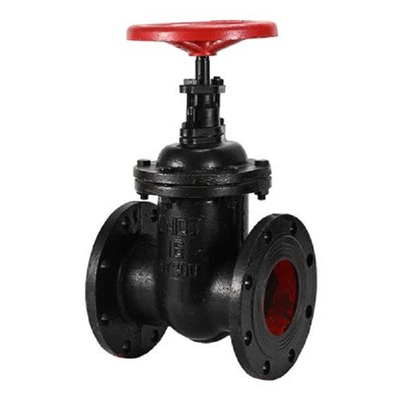


Hydraulic Flat Gate Valve
The company has various precision machining and testing equipment, large-scale surface CNC grinders, sphere machining centers and other new technologies, as well as the first-class full-performance testing equipment in the country.
Description
Your Professional Hydraulic Gate Valve Suppliers in China
Zhejiang Advanced Technology Valve Co., Ltd. is a technology-based manufacturing enterprise, which integrates designing, manufacturing and marketing valves and owns one stop service. The company's leading products include flat gate valves with diversion holes, flat gate valves without diversion, expansion double gate flat gate valves, hard-sealed double gate flat gate valves, and special flat gate valves for alumina plants.
Advanced Equipment
The company has various precision machining and testing equipment, large-scale surface CNC grinders, sphere machining centers and other new technologies, as well as the first-class full-performance testing equipment in the country.
Wide Range of Applications
The valve products produced by the company are widely used in petroleum, natural gas, chemical industry, polysilicon, coal chemical industry, power station, metallurgy, papermaking, medicine, military industry and other industries.
18 Month Warranty
We offers an 18-month warranty for each valve. Within these 18 months, if our products fail, leak, or even damage during use (excluding human factors), we will be responsible for replacing the products with quality problems and delivering them to your warehouse.
Excellent Pre-sales Service
Our pre-sales service includes the communication and confirmation of a series of transaction terms before you place an order, including price, product drawings, trade terms, delivery date, etc. In addition, in the process of order production, we will let you know the status of the product in the form of pictures and videos to confirm the production process.
Introduction of Hydraulic Gate Valve
Hydraulic gate valve is a commonly used control valve. It is based on the principle of hydraulic pressure, through the hydraulic drive to control the flow and pressure of fluid.It is mainly composed of valve body, valve seat, gate, sealing device, hydraulic actuator and so on. The working principle of the hydraulic gate valve is to control the opening degree of the gate through hydraulic pressure, thereby controlling the flow of fluid. When hydraulic pressure is transmitted to the hydraulic actuator, it drives the gate plate to move upward or downward, thereby changing the opening degree of the valve. When the gate is completely closed, the valve is in a closed state; when the gate is fully open, the valve is in a fully open state; when the gate is in the middle position, the valve is in an adjustment state, and the opening degree of the gate can be controlled by changing the hydraulic pressure, thereby regulating the flow of fluid.
Our Related Products

External Thread Slab Gate Valve
It has the advantages of simple and compact structure, reasonable design, reliable sealing, light and flexible operation, small size, smooth channel, low resistance, easy installation and easy disassembly.

When the valve is fully opened, the flow resistance coefficient is very small, and the valve will eliminate the function of the valve disc and the dirt on the sealing surface every time the valve is opened and closed.

The card sleeve adopts standard design, which is very convenient to disassemble and install, and can reduce the installation deviation when it needs to be re-installed after disassembly, making maintenance more convenient.

The packing is made of flexible graphite ring and graphite packing, reliable sealing, light and flexible operation.

The gate adopts austenitic stainless steel, the corrosion resistance is greatly improved, and the sealing leakage caused by the corrosion of the gate can be effectively prevented.

The ram has the function of the knife, which can effectively break all kinds of debris in the medium.

National Standard Flat Gate Valve
It is widely used in oil and water steam pipelines such as petrochemical industry and thermal power plants to connect or cut off the intermediate quality of pipelines. The sealing surface of the opening and closing device has compact structure and reasonable design.

It has the advantages of simple and compact structure, reasonable design, reliable sealing, light and flexible operation, small size, smooth channel, low resistance, easy installation and easy disassembly.

German Standard Flat Gate Valve
Water seal gate valve is widely used in chemical, thermal, power plants and other oil, water vapor pipeline to connect or cut off the pipeline intermediate opening and closing device.
Product Specification
|
Size |
2"~60"(DN50~DN1500) |
|
Rating |
ASME CLASS 150~2500(PN16~PN420) |
|
Design Std |
API6D JB/T5298 |
|
Body material |
Carbon steel, stainless steel, alloy steel, dual-phase steel Connection: RF, BW, RTJ |
|
Operation |
Manual, pneumatic, electric and hydraulic |
|
Usage |
Flow control |
|
Application |
Industrial Usage |
|
Face to Face |
ANSI B16.10 |
|
Pressure-Temp |
ANSI B16.34 |
|
End Connection |
Flanged RF Ends, RTJ Ends, Threaded Ends, Union Ends, Welded Ends |
|
Seat Material |
PTFE, RPTFE, PEEK, Stainless Steel, Stellite, other material optional |
|
Gate Material |
Carbon Steel, Stainless Steel, Duplex, Hastelloy, Inconel, Monel, Alloy20, Incoloy, other materials optional |
|
Working Temperature |
-196℃~600℃ |
|
Packing |
To be packed in suitable wooden cases as per client's option or customized |
|
Shipping & Delivery |
20-25 days lead time; deliver by ship from Ningbo port or Shanghai port |
|
Notes |
Serial valve connecting flange and butt-welding terminal size can be designed at customers' request. The material of the main parts and sealing surface of the valve can be designed and selected according to the actual working conditions or the special requirements of users. |
Main Features of Hydraulic Gate Valve
● The integral forging of the valve body, along with the use of carbide alloy on the sealing surface and seats, enhances wear resistance, and corrosion resistance, and extends the service life of the valve.
● The metal-to-metal sealing between the gate and seat, seat and body, bonnet seal, and stem backseat provides a secure, long-lasting seal.
● The balancing lower stem of the valve allows it to stay in position even in the absence of hydraulic power, and the double- acting actuator requires hydraulic power to both open and close. Should a failure of hydraulic power occur, this valve will remain in position.
● Balancing stem that allows the gate to stay in position unless hydraulic power is supplied to the actuator to positively open or close valve.
● Two spring-loaded, pressure-energized, non elastomeric lip seals provide low-pressure sealing and protect against particle intrusion, while the stem seal design is capable of handling a wide range of pressures, temperatures, and fluids.
● Stem seal design that covers a wide range of pressures, temperatures, and fluids encountered in wellhead and manifolds service metal-to-metal bonnet seal.
● A manual locking screw maintains the gate in the closed position without any operating pressure, and socket head cap screws are used to tie down the actuator head flanges, reducing exposure to corrosive environments.
Hydraulic Gate Valve Installation & Maintenance Instructions


Storage Conditions
To protect the seat and seals do not unpack the valves until they are ready for installation. By doing this you are protecting the valve from dust and debris which may eventually cause seat leakage.
Keep in a cool well ventilated space if storing for a longer period of time.
Valve Installation
Valves can be installed in any orientation however it is best if it can be installed upright especially in bigger sizes for ease of hand wheel access.
Verify the material of the gate valve, seat and disc before installation. Ensure that there are no defects caused by storage or transportation.
Complete all welding works before valve installation and be sure the flange has cooled to ambient temperature before installing the gate valve using the appropriate gasket.
Make sure there is no welding residue, waste, rust, pickle paste or other debris in the pipe before installation. Wash with water or a mild detergent if needed.
Make sure there is no warpage of the flange or misalignment of the gate valve in relation to the flange. This is the most common cause of valve problems where it is not aligned with the flange/pipe correctly. Support the valve where necessary to reduce load on the piping assembly.
Install the spacing bolts taking care not to damage the valve seat and adjust the face to face of the two flanges so there is space when the piping is spread open (enough space to slip the valve in or out for service).
Once the pipes are centered, insert the bolts so that the bottom of the valve can rest upon them to prevent the valve from falling through.
Tighten the bolts one at a time doing it in stages so even pressure is applied and a seal is formed between the valve, gasket and flanges.
Once the installation is complete, operate the valve several times to ensure it has not moved during installation.
Field Testing
Rubber seated gate valves are designed to hold rated pressures only. Test pressures above rated working pressure in the closed position can cause damage to the valve.
With the valve in the open position the pipeline can be tested up to the valve hydrostatic test pressure.
Seat leakage can occur when foreign material is wedged between the seat and the body. If this occurs, open the valve 10% to 15% to obtain high velocity flushing action. Close and repeat if necessary.
Maintenance
Cycle the valve at least once a month if not used regularly.
Relieve the system pressure before performing any maintenance.
To remove from pipework reverse the installation sequence.
Replace valve gate by removing the top body (bonnet) and stem. Screw out the gate and replace with new part. Install top of body and refit into line.
See video link under each gate valve model for further instructions.
Our Certificates
We guarantee that all our products have passed the quality control and stringent regulations imposed not only by our company but also by international organizations. Our certifications assure that our product line is top grade by industry standards.


Common Problem of Hydraulic Gate Valve
Hot Tags: hydraulic flat gate valve, China hydraulic flat gate valve
Send Inquiry
You Might Also Like